
NECESSARY ENEMIES
You need the early, intrusive parent to build the machine; you need the rival to test it

Dear Readers,
Thank you for reading The Kureishi Chronicles. As I continue to write via dictation with the help of my family, your support means everything.
Please consider becoming a paid subscriber, it really makes a difference.
The other night, I found myself shouting at the television while watching the new Rafael Nadal documentary on Netflix, Rafa. “Give up,” I yelled. “Why don’t you just give up?”
Late in the series he is limping again, taped together, pushing his broken body through yet another cortisone‑assisted comeback. “You’ve won everything. You’ll kill yourself if you keep going.”
What would it mean for a man like Nadal to walk away from a project that began before he knew he had a life?
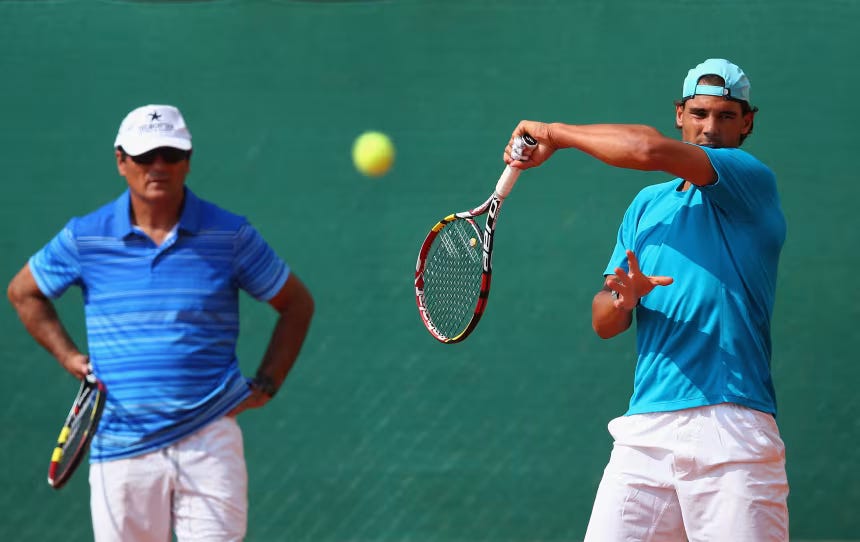
Toni Nadal, Rafa’s uncle and coach, his surrogate father, was the tormentor and architect of what we see: the endless drills, the refusal to give up, the theatre of pain – the devotion to suffering as a form of character-making.
Nadal describes his uncle’s training in the language of both gratitude and trauma: the ‘injustice’ of being singled out for harsher treatment than other children, made to play through extreme pain and fatigue, even without water. He insists that without this regime he “would not be the player I am today.”
Watching Rafa, you have the sense of a subject being used as material. Parents like this – or uncles acting as parents – make the child their proxy and second chance. Often these ‘parents’ are limited or failed performers: the thwarted club player, the frustrated painter, the immigrant father who drove a minicab so that his son would never have to. Their failure is fuel to create a star.
